Background

SAVING THE COMMON

The Halifax Common, Canada’s earliest urban park, was granted in 1763 by King George III to the citizens of Halifax "for the use of the inhabitants of the town forever".

This fact is overlooked by those who consider the Common as 'empty', 'unused', or 'available to be developed'. FHC work to protect the remaining green space.

1902
1930

Early Halifax

Founded in 1749, Halifax is one of the oldest cities in Canada. In 1763, King George III granted 240 acres of common land “to and for the use of the inhabitants of the Town of Halifax forever”.

Looking back, we recognize the colonial nature of this gesture. The land was not King George III’s to give as it is Mi’kmaq ancestral land. Despite this, the Common was established as a publicly shared green space situated in the centre of Halifax, serving the community.

Over the next two and a half centuries, the government sold Common land to individuals and institutions. As a result, much of the original Halifax Common is now occupied with buildings, cement and pavement.

How Large is the Common?

The Common originally measured 240 acres. This is equivalent to 180 football fields!

The Common included the land that ran all the way from South Street to Cunard Street bordered on the west by Robie and the east by North/South Park Streets.

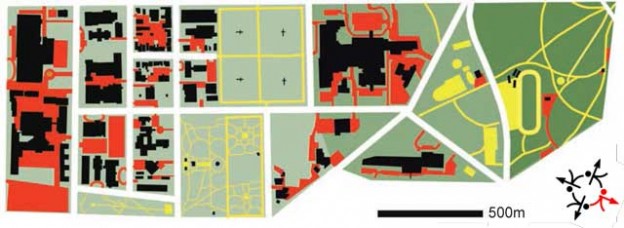
The original grant included all of the land in this footprint. Much of it is now occupied by hospitals, churches, the Public Gardens, parks, museums, schools, as well as the green space we now affectionately call “the Commons”.

Today, the accessible green space is less than 1/3 of the original Common granted to all citizens forever.
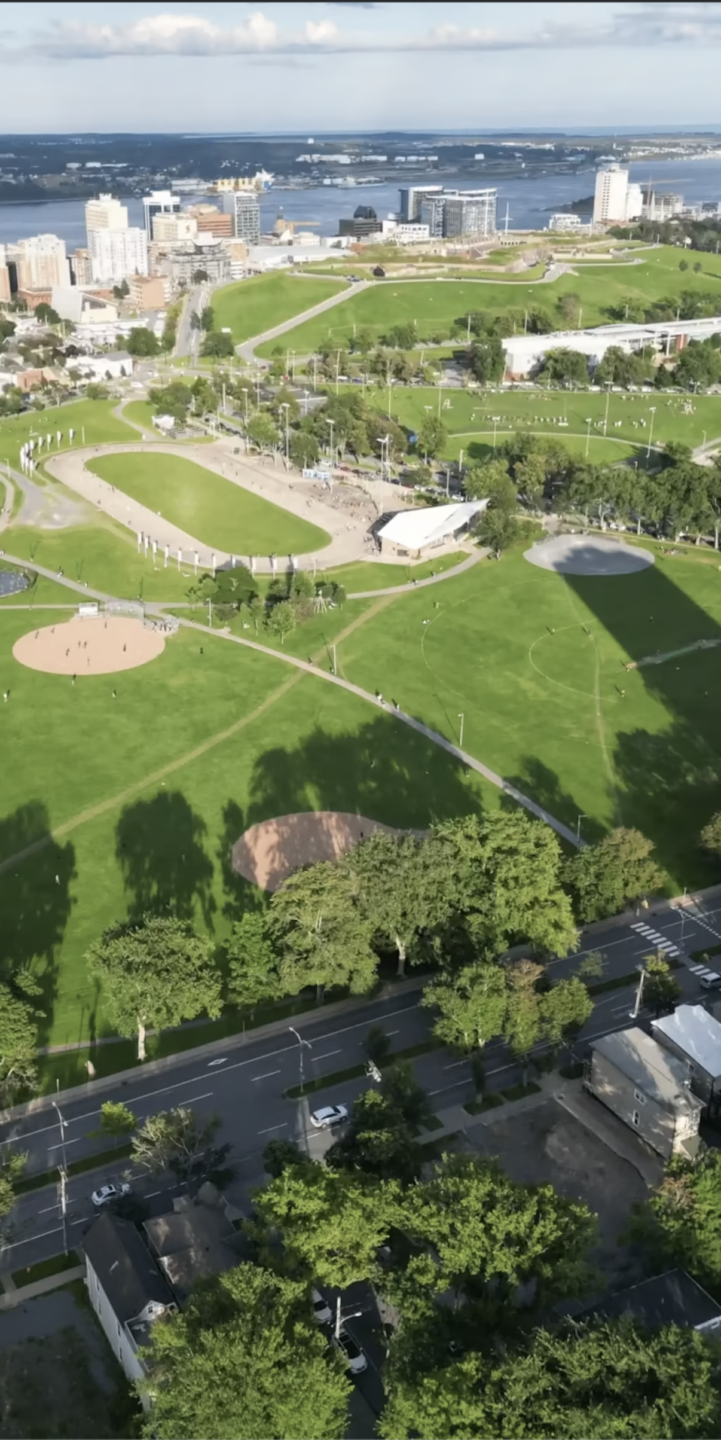
View to Citadel Hill
View to Harbour

How did this Happen?

In the early years, this land was considered a bit of a wasteland. It was used to graze cattle and was an important site for the military to drill, parade and assemble personnel.

Over many decades, Common land became the preferred location for building public institutions. Significant parcels were sold to private owners and the Province. Past government decisions to use the Common as a site for building infrastructure may have been seen at the time as a positive step but this is now in question.

Recently, the Province did not honour its agreement with HRM and unilaterally erected an 8-storey garage on Common land beside the Nova Scotia Museum of Natural History. With green space on the peninsula at a premium, the Common continues to be at risk.

Why the Common Needs Friends

FHC helps ensure that HRM uplolds their stated objectives to preserve lands on the 240 acre Common. Shortly after its foundation, FHC advocated to stop the sale of 5.5 acres of Common land at the former Queen Elizabeth High School to the Province. The sale went ahead and a rare opportunity to recapture Common land was lost.

There have been various plans put in place for the use and management of the Halifax Common. Most recently, on January 23, 2024, HRM Council adopted the Halifax Common Master Plan but the Plan omitted the Wanderers Grounds. As a result, there has been no public consultation on the use of the Wanderers Field.

Historically, the Wanderers Field has been used for amateur athletics. Our elected councillors are now proposing that a private, for profit corporation, take exclusive rights to this public land for a stadium. Without your help, this plan will go ahead at cost to all residents of HRM.
Before
After
CONNECT WITH US

Interested?

We’d love to connect with you. Whether you're curious about our work, want to participate, collaborate or have a question—just reach out.
Dial 311 with inquiries about Halifax Common facilities and events.
  • © 2026 Friends of Halifax Common

FHC Privacy Policy

We care about your privacy. FHC does not share user data.

FHC maintains a membership list and an email list for purposes of delivering news and updates. You can unsubscribe at any time.

This site does not use cookies.